

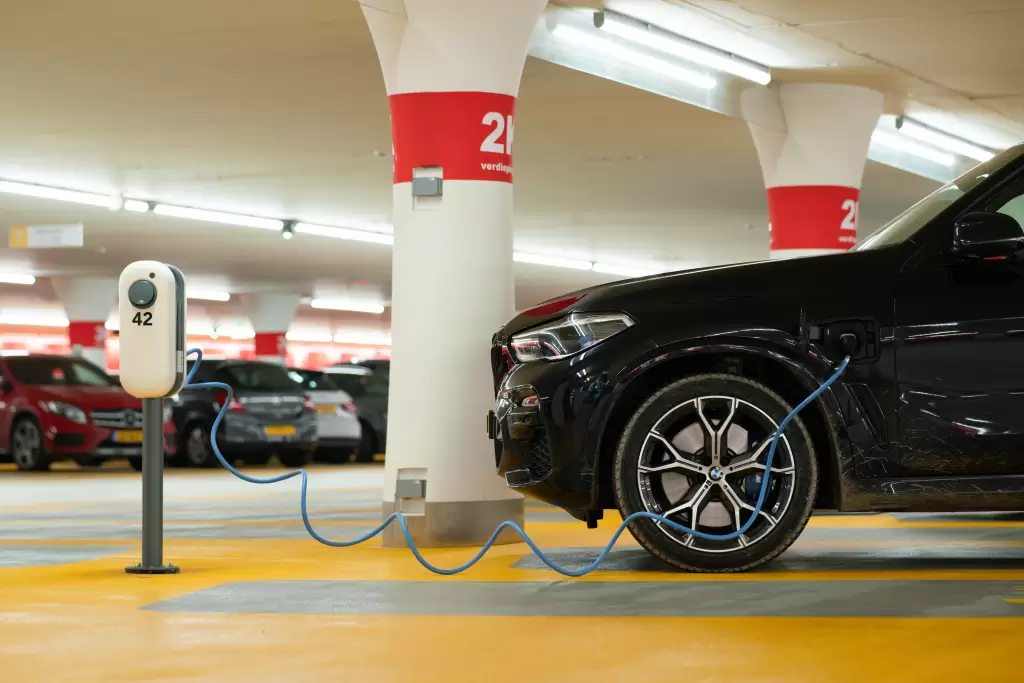
Electric vehicles (EVs) are becoming increasingly popular, with many drivers opting for them due to their environmental benefits, lower fuel costs, and the increasing availability of public charging stations. However, as the number of EVs on the road increases, so does the demand for EV charging infrastructure. In this blog post, we will explore the current state of EV charging, the challenges facing the industry, and the future of EV charging.
EV Charging Today
Currently, there are three main types of EV chargers available: Level 1, Level 2, and DC fast chargers. Level 1 chargers are the slowest and can be plugged into a standard household outlet. They provide about 4 to 5 miles of range per hour of charging. Level 2 chargers are faster and require a dedicated 240-volt circuit. They can provide up to 25 miles of range per hour of charging. DC fast chargers are the fastest and can provide up to 80% charge in 20 to 30 minutes. However, they are the most expensive to install and require a high voltage direct current (DC) connection.
Currently, there are about 100,000 public charging stations in the United States, but this is still far below what will be needed to support the growing number of EVs on the road. Additionally, there is a lack of standardization when it comes to charging connectors and payment systems. This can make it difficult for EV drivers to find and use public charging stations, particularly when traveling long distances.
Challenges Facing the EV Charging Industry
One of the biggest challenges facing the EV charging industry is the need for infrastructure investment. Installing charging stations can be expensive, particularly for DC fast chargers, which can cost over $100,000 per station. Additionally, there is a lack of incentive for businesses to install charging stations, as there is no guarantee that they will be used enough to justify the investment.
Another challenge is the need for standardization. There are currently several different charging connectors in use, including CHAdeMO, CCS, and Tesla’s proprietary connector. This can make it difficult for EV drivers to find charging stations that are compatible with their vehicle. Additionally, there is a lack of standardization when it comes to payment systems. Some charging stations require a membership or subscription, while others require payment through a mobile app or credit card.
Finally, there is a need for improved charging technology. While DC fast chargers can provide a significant amount of charge in a short period of time, they are not currently widely available and can be expensive to install. Additionally, there is a need for more efficient charging methods, such as wireless charging, which could make charging more convenient and reduce the need for physical infrastructure.
The Future of EV Charging
Despite the challenges facing the EV charging industry, there are several promising developments on the horizon. One of the most exciting is the rapid expansion of charging networks. Several companies, including ChargePoint and Electrify America, are investing in new charging stations across the United States. Additionally, there are plans to expand charging networks in Europe and Asia, which could help to make EVs more practical for long-distance travel.
Another promising development is the standardization of charging connectors. In 2020, the three major automakers in the United States – Ford, General Motors, and Stellantis – announced that they would be using the CCS charging standard for their electric vehicles. This could help to simplify the charging process for EV drivers and encourage the installation of more charging stations.
Finally, there is a great deal of research being done on new charging technologies. Wireless charging, for example, could eliminate the need for physical charging stations altogether. Researchers are also exploring new battery technologies that could allow for faster charging and longer ranges.
Conclusion
The EV charging industry