

India’s EV revolution is moving fast and understanding EV charging technology is becoming more important than ever. Whether you have recently purchased your first electric vehicle or are planning to switch, one common question appears: Should you use DC fast charging or slow AC charging?
Quick Answer
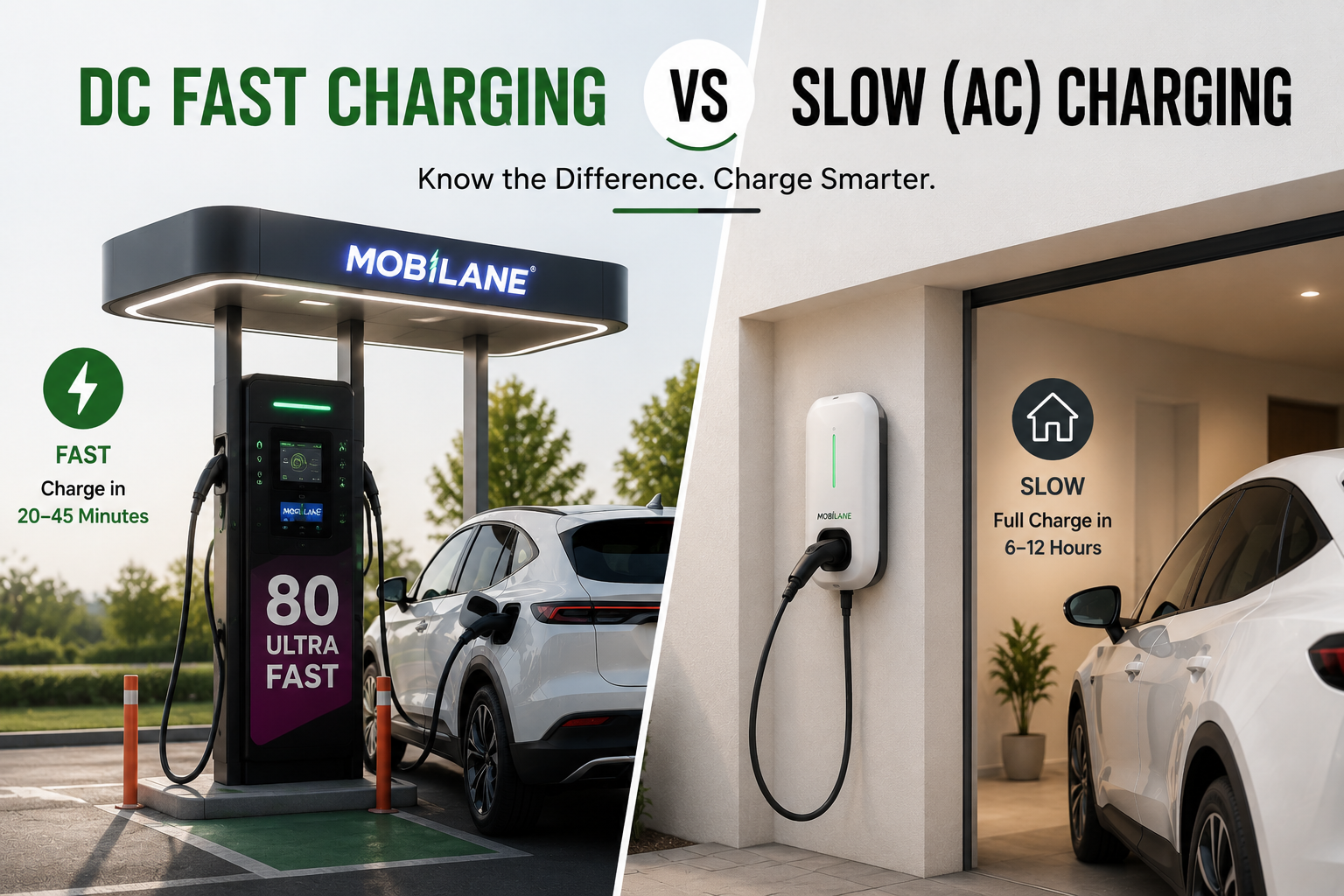
DC fast charging directly supplies power to your EV battery and can charge most electric cars up to 80% within 20–45 minutes. Slow AC charging uses your vehicle’s onboard converter and usually takes 6–12 hours.
DC fast charging is ideal for highways and quick top-ups, while slow charging works best for homes, offices, and overnight charging.
What Is DC Fast Charging?
DC fast charging, also known as Level 3 charging, sends direct current directly into an electric vehicle battery. Unlike AC charging, it bypasses the vehicle onboard charger, making charging significantly faster.
In India, DC fast chargers usually range between 30kW to 120kW. A 60kW DC fast charger can provide around 80–100 km driving range within approximately 30 minutes.
MobiLane provides fast EV charging solutions across highways and commercial locations. Explore our Public EV Charging Network to find reliable fast charging options.
Common DC Fast Charger Types in India
- CCS2: Used by Tata Nexon EV, MG ZS EV, BYD Atto 3 and many modern EVs.
- CHAdeMO: Older DC charging standard.
- GB/T: Used by selected Chinese-origin EV models.
What Is Slow AC Charging?
Slow charging uses alternating current (AC). Your electric vehicle converts this AC power into DC using its onboard charger. This conversion process makes charging slower compared with DC charging.
Most residential EV chargers in India provide between 3.3kW and 22kW charging capacity.
For businesses, apartments, hotels, and commercial spaces looking to install chargers, visit our Captive EV Charging Solutions .
DC Fast Charging vs Slow Charging Comparison
| Feature | DC Fast Charging | Slow AC Charging |
|---|---|---|
| Charging Speed | 80% in 20–45 minutes | Full charge in 6–12 hours |
| Average Cost | ₹12–18 per kWh | ₹6–9 per kWh |
| Battery Impact | Slightly higher stress | Battery friendly |
| Best Usage | Highways & urgent charging | Home & workplace charging |
Does DC Fast Charging Damage EV Batteries?
Occasional DC fast charging does not significantly damage modern EV batteries. Today’s electric vehicles include advanced battery management systems that regulate temperature and charging speed.
However, continuously charging from 0–100% using fast chargers may increase battery stress. For best results, maintain charging between 20–80%.
Which EV Charger Should You Choose?
Choose DC Fast Charging If:
- You travel frequently on highways
- You need charging within one hour
- You drive long distances
Choose AC Slow Charging If:
- You charge overnight
- You want lower charging costs
- You mainly drive inside the city
Start Your EV Charging Business With MobiLane
Looking to invest in India’s growing EV infrastructure market? Explore EV charging station opportunities with MobiLane. Explore EV Charging Franchise
EV Charging Infrastructure Growth in India 2026
India’s EV charging ecosystem is expanding rapidly with government support and increasing EV adoption. More DC fast charging stations are being installed across highways, malls, hotels, and commercial hubs.
Learn more about EV chargers: MobiLane EV Chargers
Frequently Asked Questions
What is DC fast charging?
DC fast charging sends direct current directly into an EV battery, making it much faster than AC charging.
How fast are DC fast chargers in India?
Most DC fast chargers can charge compatible EVs up to 80% within 20–45 minutes.
Can I install a DC fast charger at home?
DC fast chargers require high-power electrical infrastructure. Most home users are better suited for AC chargers.
Is slow charging better for EV batteries?
Slow AC charging creates less battery stress and is ideal for regular daily charging.
Conclusion
Both DC fast charging and slow charging have important roles in India’s EV future. Use fast chargers when you need speed during travel and slow charging for affordable everyday charging.
With MobiLane’s expanding charging network, EV drivers can confidently travel without range anxiety.